Showing posts with label Fishing. Show all posts

Tuesday, May 1, 2018

Melinka - life at the edge of the sea -


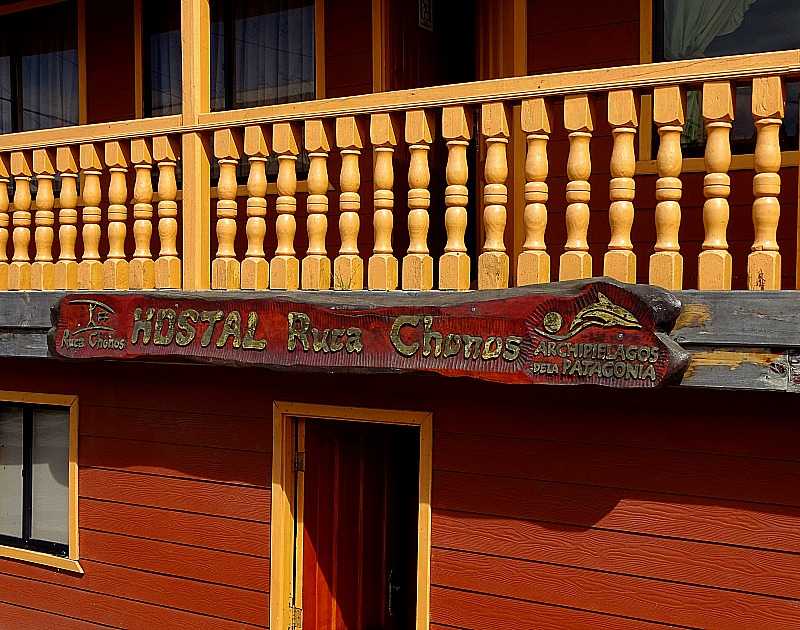
Melinka, Chile

March 16, 2018
Temp. Range:  42F-57F
Cloudy with sunny periods


MELINKA - according to local legend the
 word melinka comes from Russian and
 means 'lovely.'

 Yes, the sun did shine and it became pleasantly warm for our visit to this small,
Interesting town on Ascención Island.  Not originally part of our itinerary, we stopped
 here as the storm had put us too far behind to make our scheduled landing on
 Chiloé Island further north.

Melinka, pop. 1,411, is a very isolated fishing town with access to the rest
 of Chile by ferry boats plus a small airport.
 An additional population of around 200 transient workers make it the largest town
 in the Southern Chilean Archipelago. It is nestled in a setting of endless verdant,
 pristine islands ideal for fishing, sailing, boating and sea kayaking. 
The town sits on a small peninsula off the main island of Isla Acensión and
 shelters a small harbor.

Heading from the Hebridean Sky to Melinka via Zodiac boat.
Salmon and seafood is the main industry here as in all small Chilean coastal
 towns and villages, both by fishing boats with nets, and diving for shellfish.
Arriving ashore, easy dry landing onto a jetty.
A big part of this area's mythology revolves around Melinka's beautiful
 mermaid statue in the town square. It's said that if she faces the sea it
means good luck for the fishermen. . . . . . . . . .
. . . . . of course being an unmovable statue she always faces the sea!

Wooden Church.

Colorful murals painted along the streets.


Do you know that daily earthquakes occur in Chile?
Thankfully they are mostly small causing little damage.
There was one in the past 24 hours, 13 in the past 7 days,
 49 in the past 30 days, and 560 in the past 365 days!!!

On December 25, 2016 a huge earthquake measuring 7.6 on the Richter Scale
 was centered in this area. Melinka suffered heavy damage to many buildings and
 boats in the harbor area.
Hazardous tsunami waves up to 3 meters were forecast as possible, however
 thankfully that did not happen. Along every small street we noticed the the 
Tsunami warning signs. Many homes and boats were still being restored from
the severe 2016 quake.


The tiny harbor.
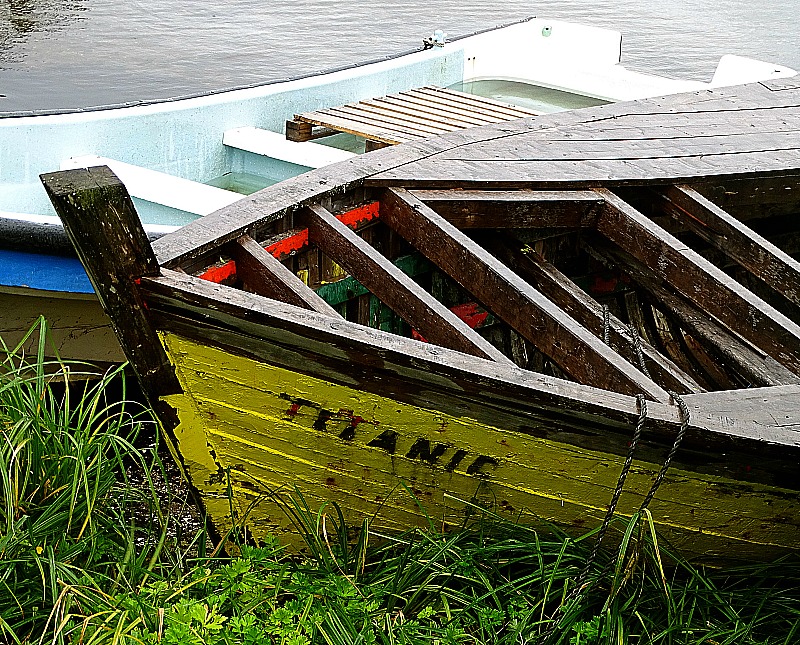
Re-building damaged fishing boats.


Earthquake damaged house still in need of repairs - but this big guy doesn't seem to mind.


Below:  Lovely flowers along Melinka streets.


Weather was close to perfect for sightseeing and we enjoyed a smooth
 ride back to the ship.
The following day was to be the final day sailing the magnificent fjords of Chile
as we headed to Puerto Montt.

"HAPPY MAY DAY"

Monday, April 16, 2018

Puerto Edén. . . . .Cruising the Chilean Fjords


Villa Puerto Edén, Chile
March 15, 2018
Temp.Range - 40-51F
Cloudy with Rain


Tucked under the shadow of the snow-encrusted Andean peaks, lies
 Puerto Edén, a Chilean hamlet and minor port only accessible by sea. 
Located on Wellington Island west of the Southern Patagonian Ice Field, 
it is the only settlement, has a population of 176, and is renowned for being
 home to the last Kawésqar people, a nomadic seafaring people. 
Also called 'canoe people' by some anthropologists, they built canoes 8-9 meters
 long and one meter wide which would hold a family and its dog, on which they lived.
They continued this fishing, nomadic practice until the twentieth century, when
 they were moved to settlements on land. Their traditional language is
 Kawésqar and is now endangered as few native speakers survive.

In 1881, European anthropologists took eleven Kawésqar people fom Patagonia 
to be exhibited in the Bois de Boulogne in Paris, and the Berlin Zoological Garden.
Only four survived to return to Chile. Early in 2010, the remains of five of the 
seven who died were repatriated from the University of Zurich, Switzerland, where
they had been held for studies. Upon return of the remains, the president of Chile
formally apologized for the state having allowed these indigenous people to be
taken out of the country to be exhibited and treated like animals.
A very sad story needless to say.

Puerto Edén has an extremely wet subpolar oceanic climate and is widely
 reputed to be the place in the world with the highest frequency of rainfall, and an
 average of 226 inches per year.
Because of the extraordinarily humid climate, the village has no roads, only
 pedestrian boardwalks connecting the houses and few shops. These walkways, 
sadly in disrepair, were very wet and slippery due to the climate conditions, 
and one of our passengers fell and broke her wrist - she however remained a
 trooper and continued on with the trip following attention by our charming
 Ukrainian ship's doctor. 

Puerto Edén is a very poor village but it was interesting to see how people manage 
to carve out a living in such a remote part of the world. There were a few
 handmade objects for sale by two women in a tiny shack, and it is always
appreciated to spend some cash for although landing fees are paid by the ship,
the villagers themselves gain something directly out of tourist visits.
We were told we were the first tourist ship to visit the island in 13 months - of course
only small ships are able to get there and landing is only possible by Zodiacs.
We were asked not to purchase any food items from the tiny grocery as the people
receive supplies infrequently via a Navimag ferry - their only lifeline with the outside
 world - and a weekly transport boat which takes local fish and shellfish products
 to markets. The inhabitants' livelihood comes from diving for mussels and sea urchins.

It was a dry landing onto a jetty with staircase and handrails.
Brightly colored wood and corrugated sheet metal buildings make 
up the hamlet.

A wet welcome - hard to tell which was humidity and which was actual rain - not
 a very cheery, comfortable climate that's for certain.


A typical house in the village - few people were actually seen.
Fuchsia was rampant on the island and home to many hummingbirds - they
 were so fast though I was unable to take photos of those beautiful tiny birds.


Our ship at anchor in the fjord, and fishing boats from which the men dive for
 mussels and sea urchins - the latter sold mostly to Japan. Most do not use air tanks, 
just hoses attached to an air compressor on the boats.

We left Puerto Edén with a forecast of a severe weather system affecting the
 Chilean Pacific coast. 
This produced a very rough, stormy night - a lot of people seasick - and required
 changes to our planned route as we were required to take shelter longer in the fjord
 system before continuing north on our ocean voyage. 

Next time, visiting Melinka where damage from the huge earthquake of 2016
was still visible - but people go about their lives despite tremors 
almost daily! 

Monday, November 30, 2015

Dawn to dusk at the shore. . . . . . .


Early morning. . . . . . sun coming up over the Atlantic.
View from the hotel balcony.
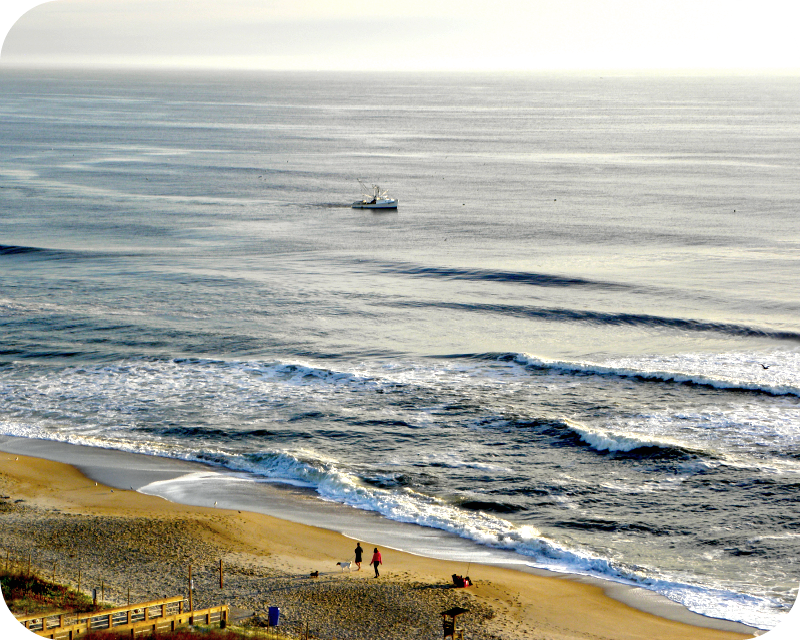
A few fishermen and beach strollers already out on the sand.
One lone fishing boat trawling just off the shoreline. . . . . 
fresh catch, and breakfast for many gulls and pelicans.


View south toward Kure Beach and pier.

Lots of surfers enjoying the winter waves.

Looking across the pond to my homeland.


Afternoon beach walk to gather some shells.


Sunset came early after beautiful warm days - Friday, Saturday and Sunday were close
 to perfect weatherwise, perhaps the best beach weekend ever for us this late in the year.