Showing posts with label Germany. Show all posts

Monday, August 31, 2015

COLOGNE, Germany - Part II


In my previous post I shared photos of the exterior of the magnificent 
Gothic Cologne Cathedral, the largest in northern Europe, here are 
photos I took of the splendid interior.
Entering Cologne Cathedral took my breath away. First, one feels incredibly small 
beneath the 140 foot ceilings. It was light and bright with numerous soaring stained 
glass windows, paintings, frescoes, statues, carvings, and hanging tapestries, artifacts 
in silver and gold. 
There was no evidence of the darkness of the Gothic exterior, the eye was 
immediately struck by color and light everywhere.


After feasting my eyes on beauty whilst looking up, around and about, on reaching 
the choir I suddenly looked down where my feet stood on what to me were the most 
exquisite mosaic floors. 
These were so beautiful and the work to create the meticulous designs
must have have taken many artists years - there were so many areas covered.

I really loved the natural things depicted in the designs - acorns and oak leaves, 
grapevines bearing fruit,  ivy twining, even the thistles of Scotland with the 
English Tudor Rose in the center (above), which I admit I've only just noticed in my photo.

Via Cologne Cathedral 

Cologne Cathedral Floor Mosaic Floor Plan

The floor, completed in 1899, measures 1,350 square metres and is the largest 
work of art in the cathedral. 
It covers three main themes, each of which is portrayed in a different 
part of the choir: the history of the archdiocese takes up the entire ambulatory and
 features names and coats of arms of bishops and archbishops; the Christian world
order and humankind are portrayed in the inner choir; and the cosmos is depicted
 in the crossing
The entire cathedral is gorgeous - having a chance to view, even though our time 
was brief, was time well spent and memorable. Once again, Germany's 
beautiful architecture and art came through - noticed in the smallest village 
house to the largest place of worship.


Sunday, August 30, 2015

COLOGNE, Germany - Part I


Sunday, beautiful late Summer morning, and I'm working on my final posts 
from the Spring trip we took from Budapest to Amsterdam, and the last pix from 
Devon and London trip in June. I need to remove many photos from my 
laptop to my TRAVEL portable drive before I travel again ---------
---------I desperately need to free up some storage space !

Cologne, Germany's fourth largest city, is a major cultural center filled with museums, 
galleries, the university, historical architecture and of course the easily recognizable 
Cologne Cathedral which dominates the skyline.

Construction on this magnificent Gothic cathedral in the Old City commenced in 1248
and continued in several stages over seven centuries. Finally completed in 1880, it 
largely escaped the damage that ravaged the city during World World II. 
The largest Gothic cathedral in northern Europe, and a UNESCO World Heritage 
Site, it has two soaring spires and beautiful stained glass windows.


Friends Kim & Rob at the main entrance to the cathedral.
I think this photo shows its massive size compared to the people in the 
background.


In my next post I'll share the interior of the cathedral - a truly fabulous place full of 
color and light, quite different from the somewhat dark exterior.


Wednesday, June 10, 2015

Middle Rhine and the castles of Germany. . . . . . .


Germans affectionately call their cherished river, "Old Father Rhine".
Beginning as a trickle in the Swiss Alps, it flows 820 miles through several countries 
to the North Sea. The Upper Rhine carves out Germany's borders with Switzerland
and beautiful French Alsace, and the Middle Rhine creates a stunning canvas of 
picturesque forests, vineyards and castles before leveling into the Lower Rhine, the 
Netherlands and the scenic Rhine River Delta.

Castles and wines take center stage along the Middle Rhine. On the 
steepest riverbanks, grapes are still harvested by hand, a tradition dating 
back 2,000 years when Romans introduced viticulture here. Later, medieval 
noblemen built soaring castles to oversee trade, collect tolls, and defend kingdoms 
from marauders and power seekers, as storybook towns and villages rose along 
forested shores.


 First view of beautiful Marksburg Castle. Most Rhine castles have been heavily 
damaged or largely destroyed by everything from battles to lightning, but Marksburg 
is intact.


Our visit to the castle was part way by bus from the port, and then a somewhat strenuous, 
but worthwhile climb.
The evening was then spent in Koblenz. We sailed at night to Bonn for a tour 
of nearby Cologne's Old City and cathedral the next day.


Monday, June 1, 2015

Passau, Germany and beautiful music. . . . . . .


Passau, known as the "City of Three Rivers" lies at the confluence of the Inn, Danube 
and Itz - and is the last major German city on the Danube at the border of Austria. 

 St. Stephen's - a magnificent baroque cathedral located on the highest point in 
Old Town. Home to the largest cathedral organ in the world with 17,974 organ pipes, 
all five parts of the organ can be played from the main keyboard offering an 
unforgettable acoustical delight.
We attended the noon concert. . . . . . along with around perhaps another thousand
visitors. It was an awesome sound!


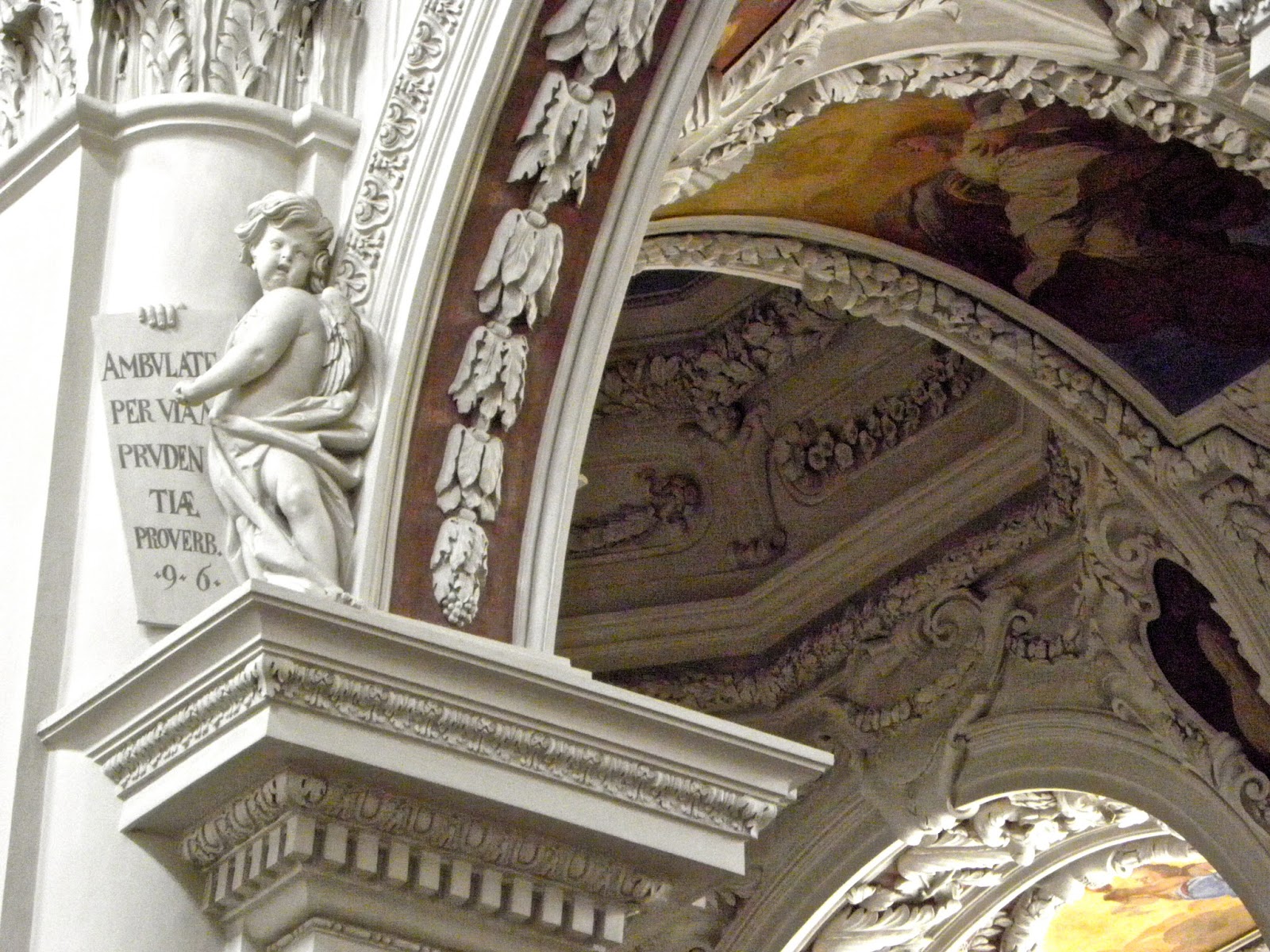
 Interior of St. Stephen's Cathedral. 
Devastated by a fire in 1662, it was rebuilt by the famous baroque architect 
Carlo Lurago, its beautiful stucco works done by Giovanni Batista Carlone, 
and the gorgeous frescoes painted by Carpoforo Tencalla.
Breathtaking in every way!


Passau's pretty riverfront gardens.


A city of just 50,000, the Old Town with baroque churches and patrician 
houses is crowded onto the narrow tongue of land separating the Inn and 
Danube rivers. Flooding often occurs and markers on the buildings noted the 
high water levels over the years.
Once a medieval center for the salt trade known as "White Gold", then famous during 
the Renaissance for making high quality knife and sword blades. Local smiths 
stamped their blades with the Passau wolf to grant their owners invulnerability, this 
became known as "Passau Art".

 Passau has now become the economic, cultural and communications center of 
southeastern Bavaria.
Next stop along the Danube, Regensburg, where shipboard life changed!